
Walk-In Wardrobe Design Ideas That Work in
Modern Australian Homes
Great wardrobe design starts with understanding how the space will actually be used.
A wardrobe is not just storage. It supports your daily routine, how you move through your bedroom, and how easily you access clothes, accessories, and essentials. Whether it is a built-in wardrobe or a walk-in wardrobe, the goal is to create a bedroom storage solution that feels intuitive and effortless.
Designing a stylish wardrobe begins with assessing your storage needs. What you hang, fold, or store should shape the layout from the beginning. This is what separates a well-organised wardrobe from one that looks good but doesn’t function.
Choosing the Right Wardrobe Layout
Your wardrobe layout is where everything begins. It determines flow, storage capacity, and how the space feels.
Built-In Wardrobes
Built-in wardrobes are ideal for smaller spaces where maximising space is critical.
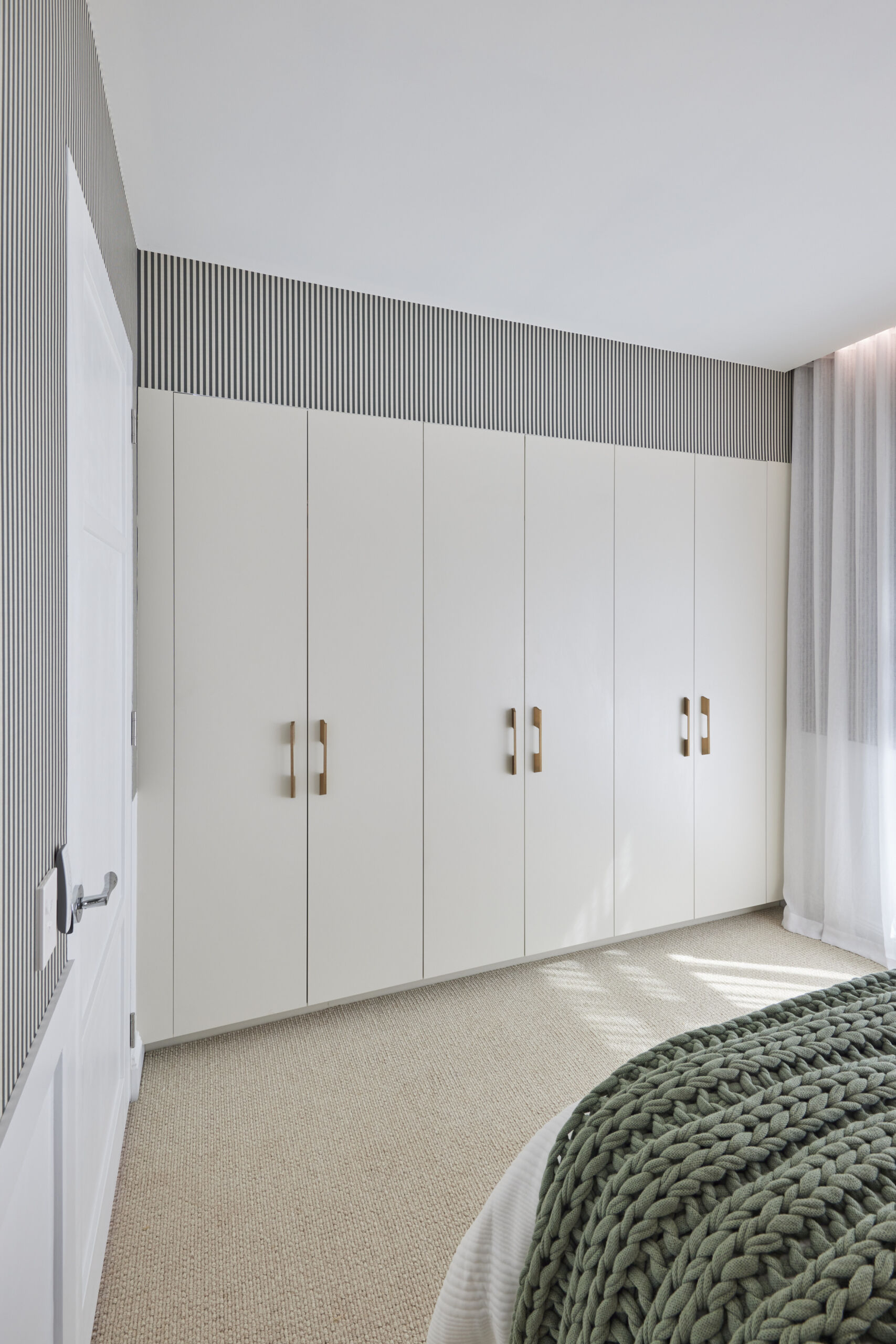
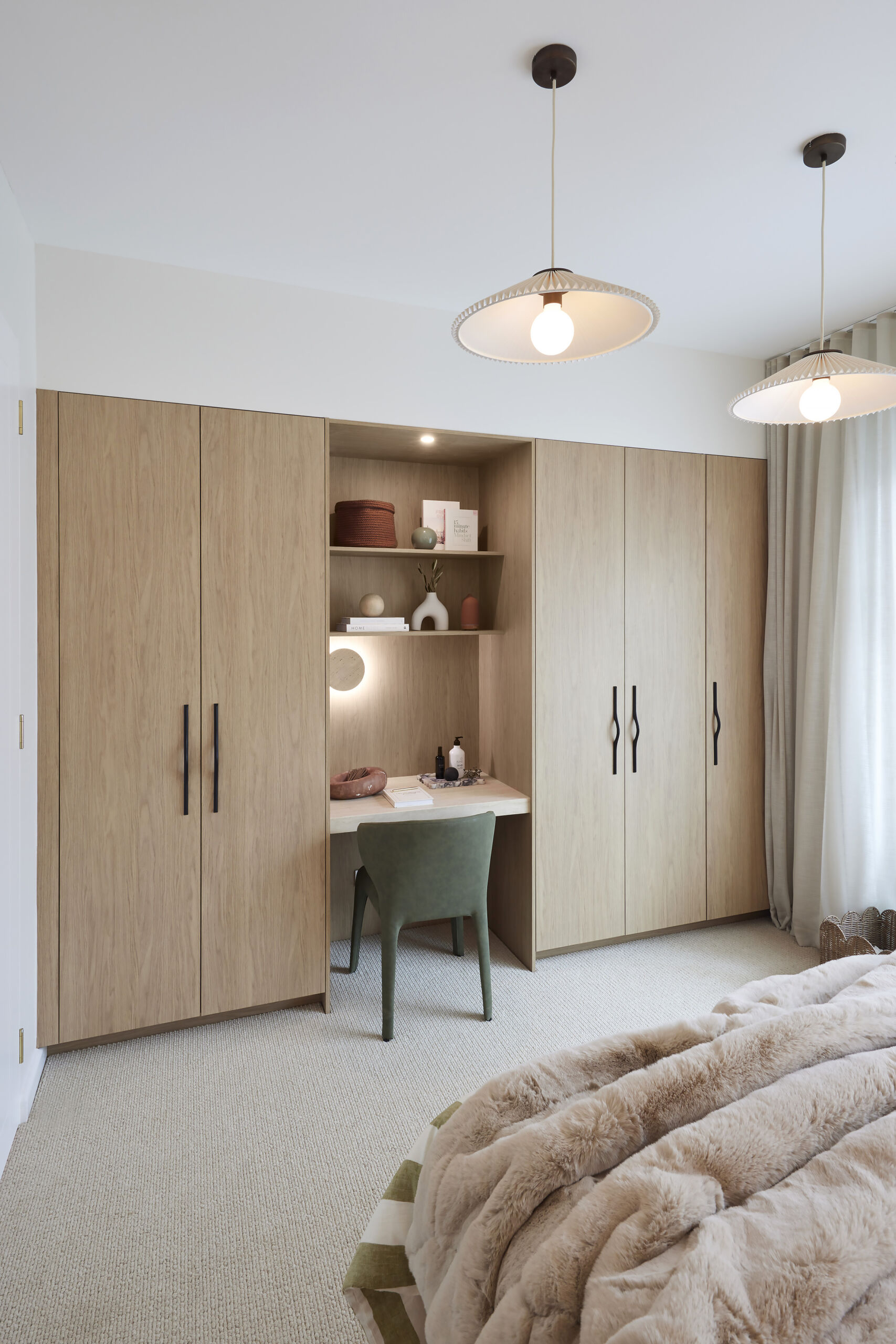
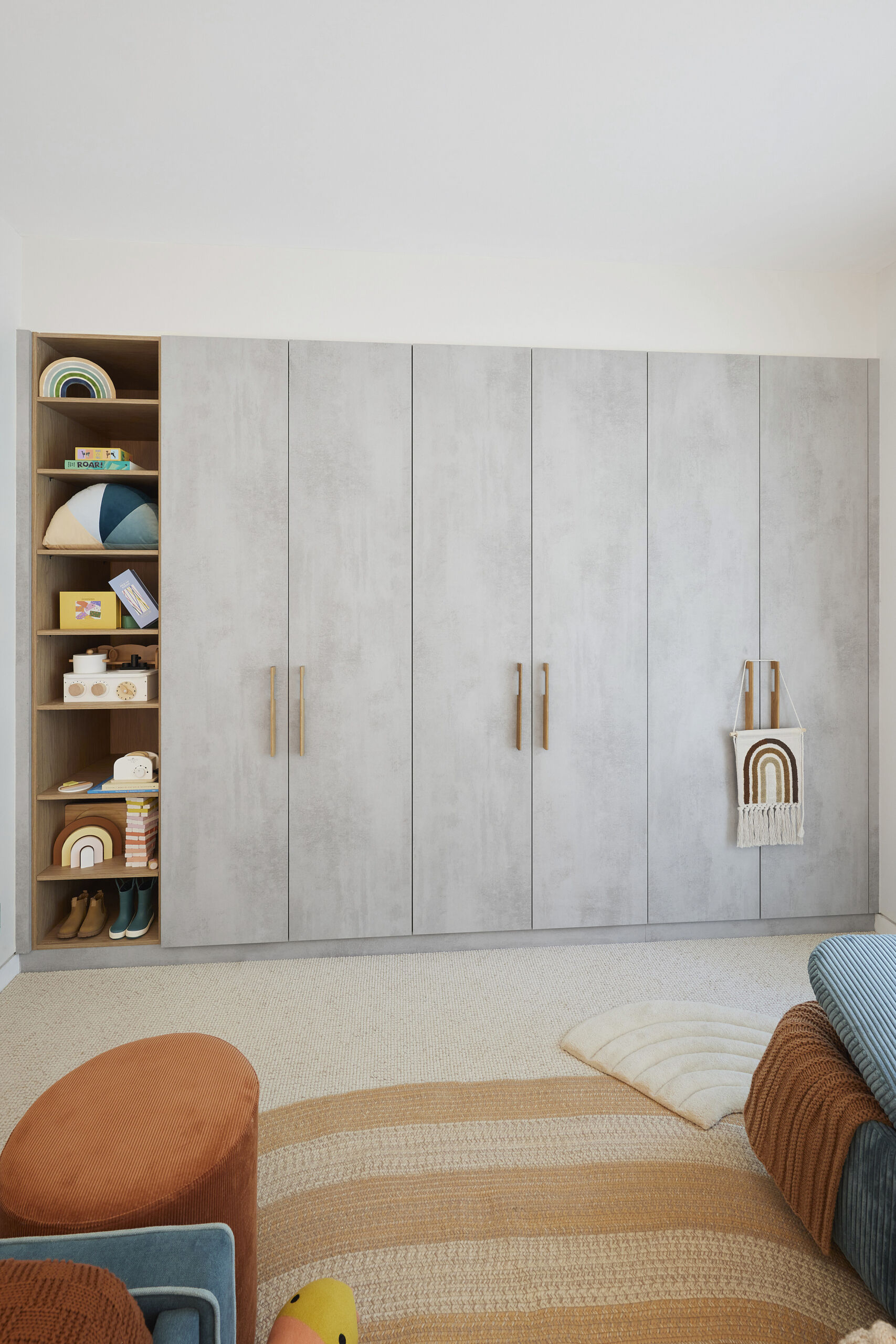
They fit seamlessly into the wall, creating a clean look while using the full height of the room. Sliding doors are often the best choice here, as they save floor space and eliminate the need for door clearance as they do not require a swing radius.
Full length mirrors on wardrobe doors can make a huge difference in smaller rooms by reflecting light and visually enlarging the space.
Walk-In Wardrobes
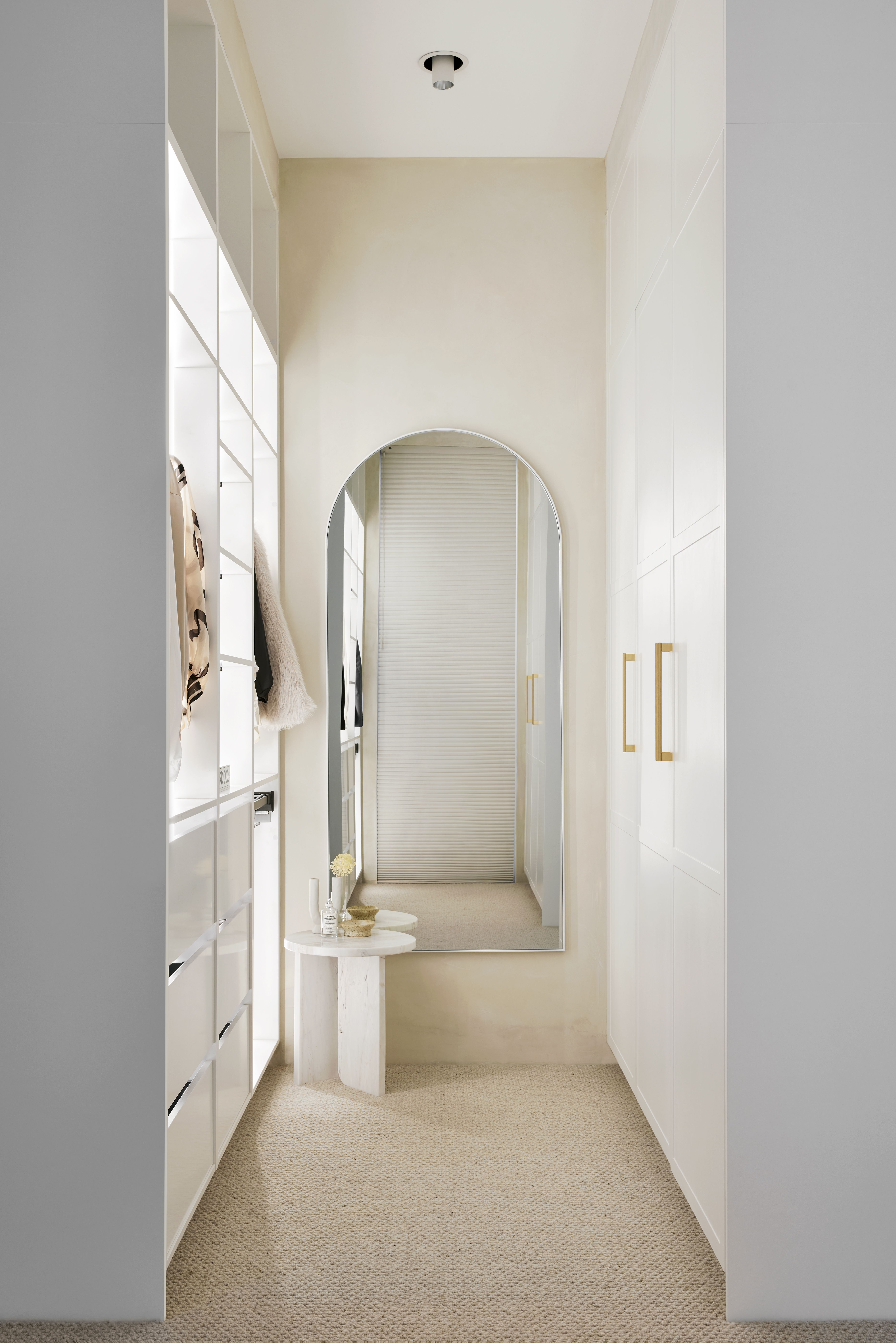
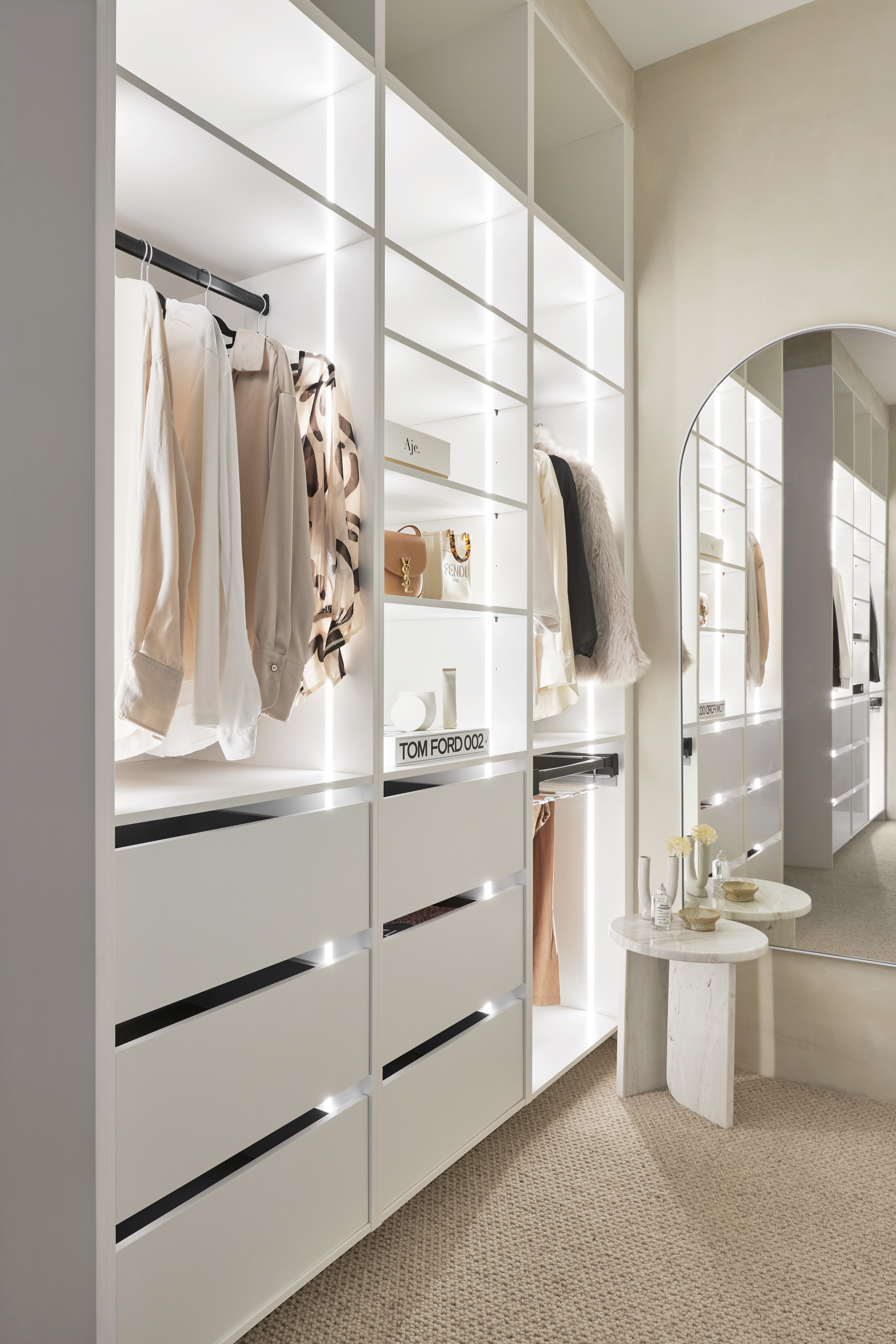
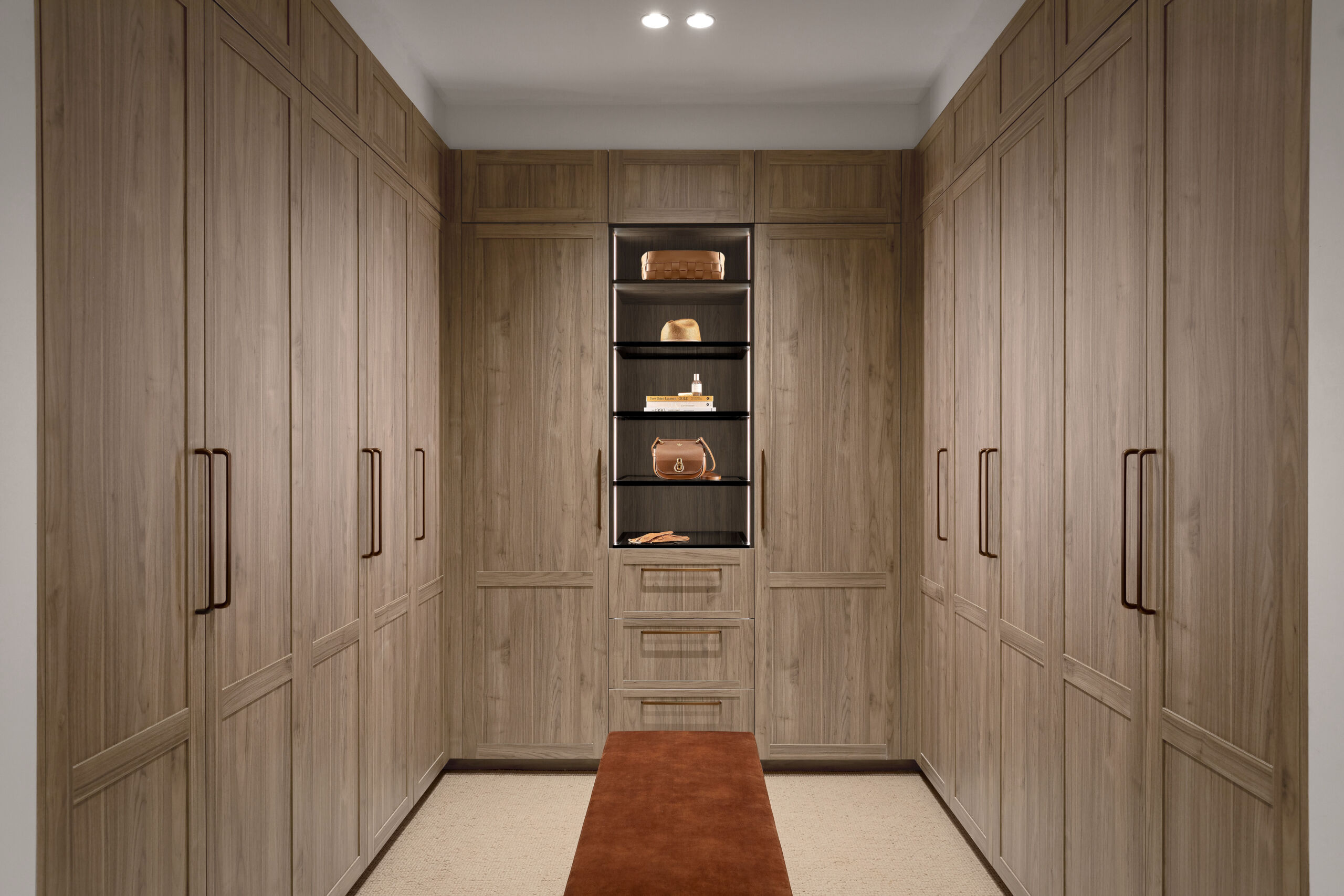
A walk in wardrobe introduces a more considered and luxurious experience. It becomes a dedicated area within your bedroom or if space permits, a separate dressing room where storage, movement, and visibility are all improved. Walk in wardrobe ideas should always start with layout and flow rather than aesthetics. A well-planned walk-in robe balances hanging space, drawers, and shelving while allowing enough room to move freely.
Common layouts include:
- U shape layouts, ideal with a minimum width of around 1.8m
• L shapes, suited to corners or irregular rooms
• Galley style layouts for narrower spaces
Design tip: Maintaining a walking clearance of 60 to 90 centimetres ensures comfortable movement without compromising storage.
Designing Storage Around Real Use
The most effective wardrobe design is built around how you actually use your clothes, and how much you have in each category.
A practical configuration typically includes:
- Double hanging rails for everyday clothing
• Dedicated sections for long coats and dresses
• Drawers for smaller items and accessories
• Shoe racks or drawers to keep footwear organised and accessible
Double hanging rails can support up to 80 percent of clothing, making them one of the most efficient ways to maximise vertical space.
Shallow drawers, around 200mm deep, are ideal for accessories as they keep everything visible and easy to access.
Pull down rails and pull-out accessories can also help maximise depth and improve accessibility, especially in higher sections.
Maximising Vertical Space and Storage Capacity
Modern wardrobe design in 2026 is focused on vertical space. Installing cabinetry and shelving to the ceiling allows you to store seasonal or less used items higher up, keeping everyday items within easy reach.
Adjustable shelving is another must have. It allows the wardrobe to adapt over time as your storage needs change.
Using corners wisely, incorporating pull-out storage, and layering shelves, drawers, and hanging space creates a storage system that feels complete rather than fragmented.
Decluttering also plays a critical role. Removing items you no longer wear instantly frees up storage space and improves organisation.
Materials and Finishes That Define Style
Materials influence both durability and the overall feel of the wardrobe.
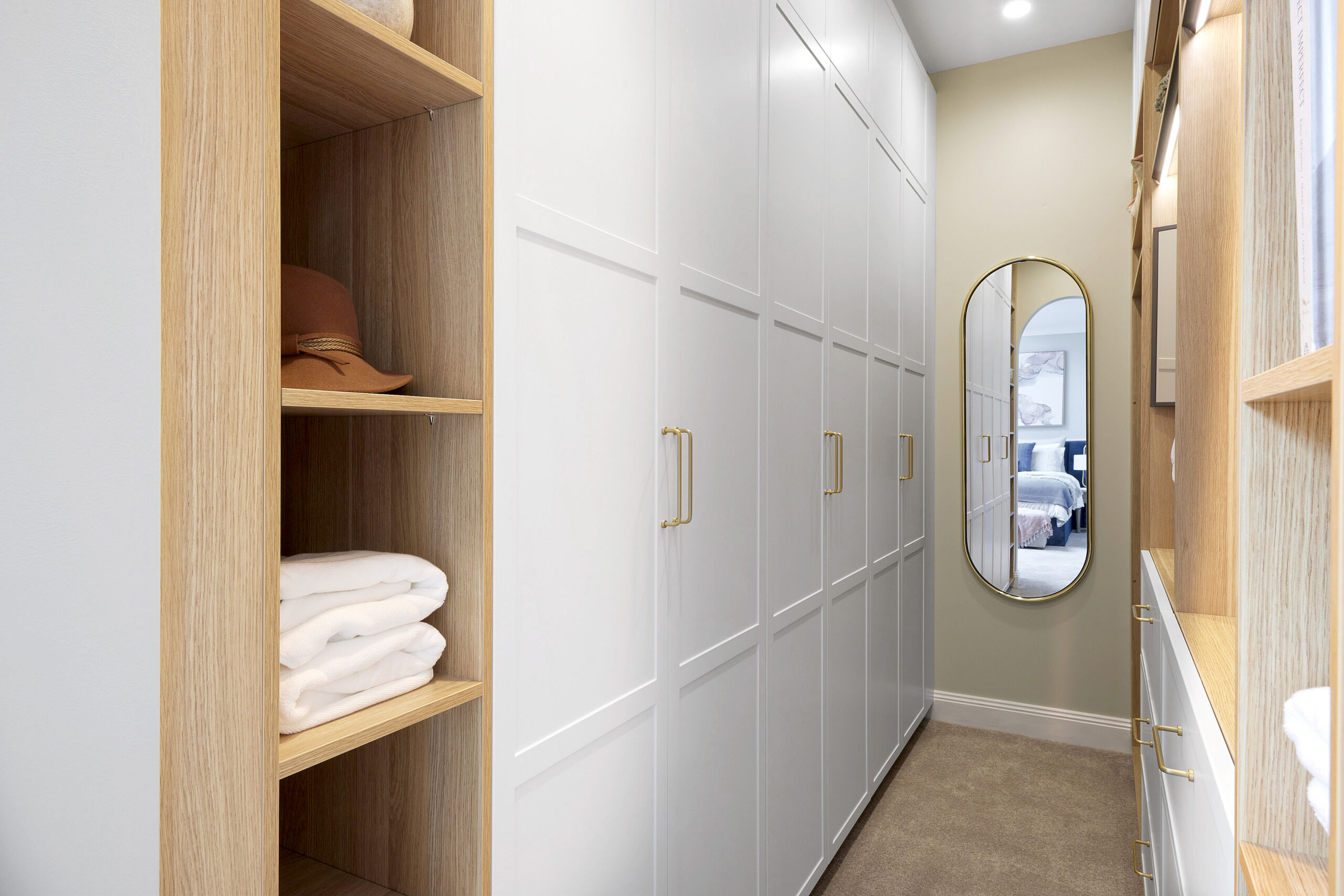
Durable finishes ensure longevity, while the right palette helps the wardrobe complement the bedroom. Current trends favour warm whites, soft beiges, and matte timber finishes such as matte oak, creating a timeless and contemporary style.
The combination of materials should feel cohesive, allowing the wardrobe to fit seamlessly within the room rather than stand apart.
Lighting That Transforms the Space
Lighting is one of the most underestimated elements in wardrobe design.
Good lighting is essential for both functionality and aesthetics. It improves visibility, makes clothing easier to find, and enhances the overall experience of the space.
Integrated LED lighting, including our vertical LED strip lights, can create a more refined and luxurious feel. Sensor activated LED strips are particularly effective in darker corners, improving usability without effort.
Task lighting around key areas such as drawers and hanging sections ensures every part of the wardrobe is visible.
Design Features That Elevate a Walk-In Wardrobe
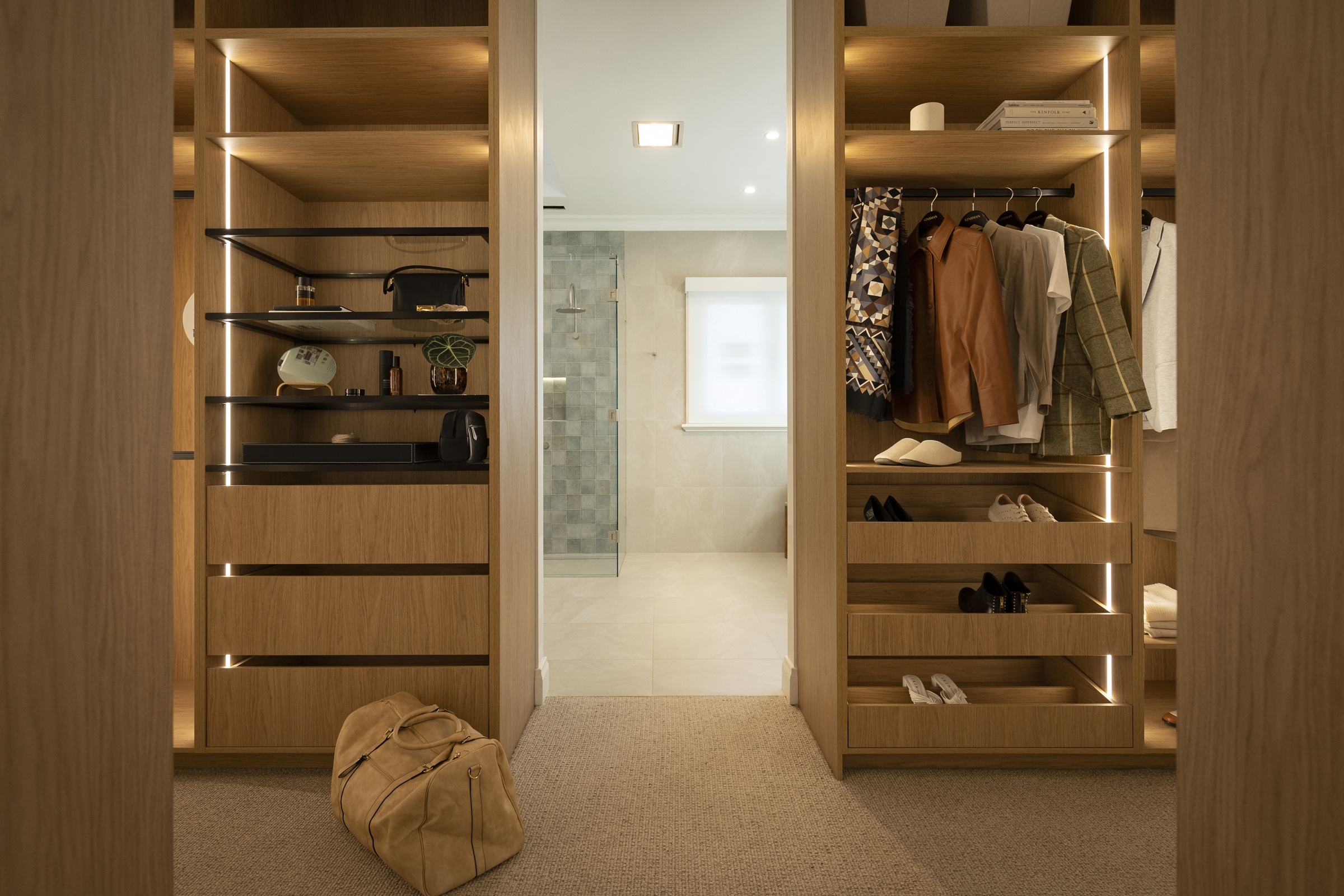
A well-designed walk-in closet or dressing room goes beyond basic storage.
Luxury features can include:
- Glass topped drawers for displaying watches and accessories
• Integrated lighting within cabinetry
• Dedicated seating areas, such as a bench seat, for comfort
• Full length mirrors to enhance space and usability
Incorporating seating transforms the wardrobe into a more personal space, while mirrors enhance light and create a greater sense of openness.
These elements are not just aesthetic. Every feature should enhance daily use and functionality.
What Designers Consider Before Finalising a Wardrobe
Before a wardrobe design is completed, several key factors are reviewed:
- Available space and room proportions
• Wardrobe layout and access points
• Balance between drawers, shelves, and hanging space
• Natural light and artificial lighting requirements
• Integration with the rest of the bedroom
Standard wardrobe depths, typically around 500mm, are also considered to avoid overcrowding while maintaining accessibility.
A well-considered design ensures the wardrobe feels intuitive, comfortable, and built for long term use.
Common Mistakes That Limit Wardrobe Performance
Even good wardrobe ideas can fall short if key principles are overlooked.
Common issues include:
- Not prioritising lighting
• Too much hanging space and not enough drawers
• Poor use of vertical space
• Overcrowding the design with unnecessary elements
• Ignoring storage for shoes and accessories
Avoiding these mistakes makes a huge difference in how the wardrobe performs over time.
Designing a Wardrobe That Fits Your Life
A great wardrobe is not just about appearance. It is about making daily life easier.
When layout, lighting, materials, and storage are planned together, the result is a wardrobe that feels organised, functional, and aligned with your lifestyle.
Whether it is a built-in wardrobe or a luxurious walk-in robe, the most successful designs are those that adapt over time while maintaining a consistent and refined look.
Be inspired to get beautifully organised with your perfect wardrobe layout
Ready to discover your perfect Kinsman Wardrobe layout for your home?
Book your free in-store, in-home or Virtual Design Appointment HERE today.
For more inspiration, download our latest catalogue HERE.